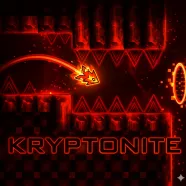




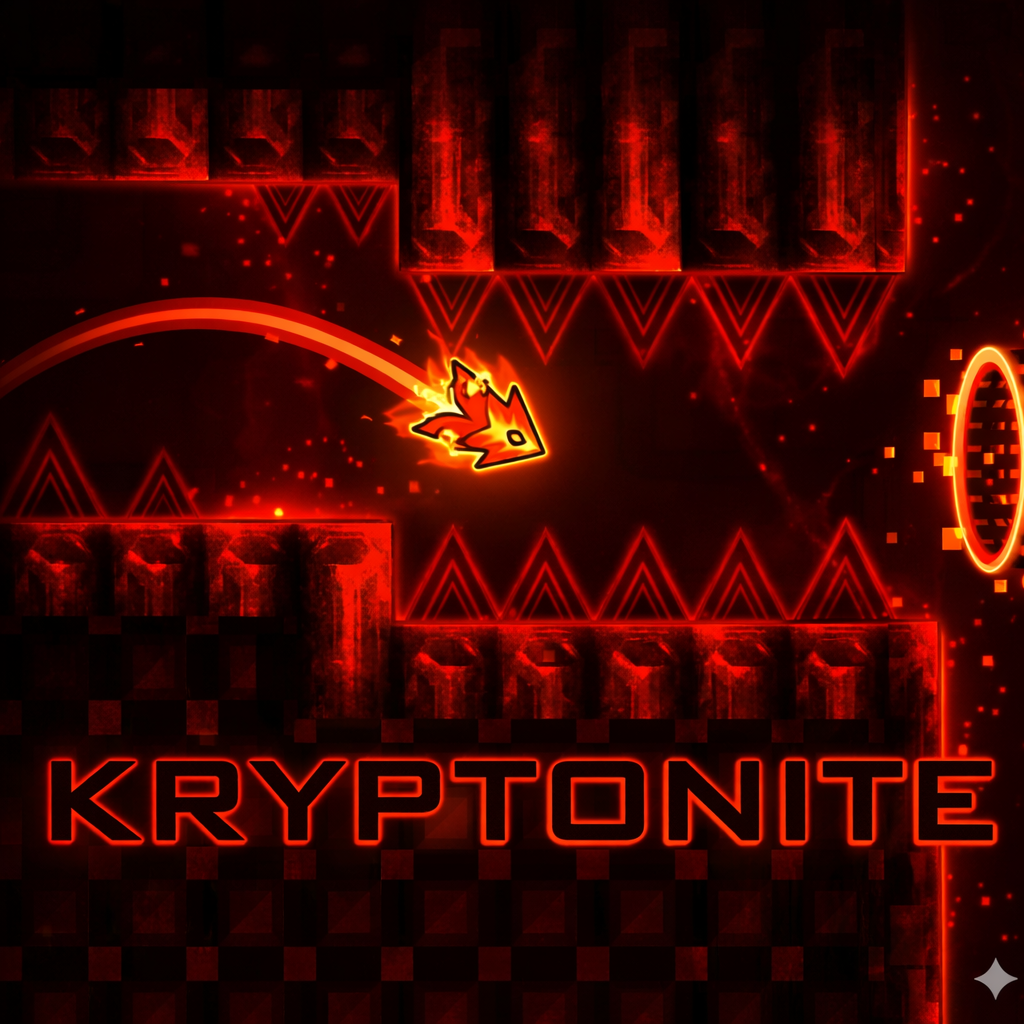
Without a large map, Dashmetry Kryptonite appears as a tightly compressed 20-second race. Each click is a heartbeat, and every small misstep is magnified into instant failure.
The Arcade Rhythm Becomes A Countdown Clock
The game doesn't tell a story in words but through speed in short segments. The entire structure revolves around four symbolic forms: cube, ship, wave, and ball, with no coins or side branches. The architectural blocks are placed close together, speed changes abruptly, and movement space is always minimal. Shapes rush by, gravity reverses, and teleportation gates open continuously like doors that only have time to close. Each segment seamlessly transitions, leaving no pause, transforming the experience into a continuous rhythmic sequence. There's no room for hesitation, only reflexes, memory, and the ability to keep pace in a rain of obstacles.
Demon-Level Sprint
Designed as a test of skill, Dashmetry Kryptonite focuses entirely on narrow spatial awareness. There are no checkpoints; the entire playthrough must be completed in one continuous pass. The absence of coins or side paths allows all attention to be focused on visual traps. Levels also support extended modes, such as the repeat mode and bonus systems. The experience seems like a cube-based composition due to its small size, rapid pace, and continuous scene shifts.
Controls And Survival
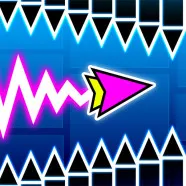
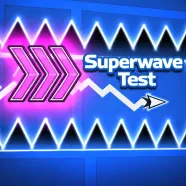
The difficulty starts with cubes in a densely spiked environment. Each jump needs to be perfectly timed to maintain rhythm and safely approach the transformation gate. When transitioning to the ship, speed increases sharply and the flight path narrows, requiring a stable trajectory. The wave segment demands precise zigzags as obstacles are placed diagonally to create spatial illusions. In the ball, the rotation of gravity must be precise to avoid collisions with the spikes above and below. The final section returns to the cube with a seemingly straightforward structure but ends with a series of rapid spikes.
Uncompromising Rhythms