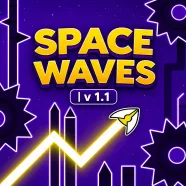


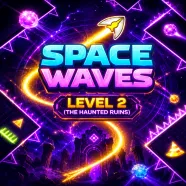




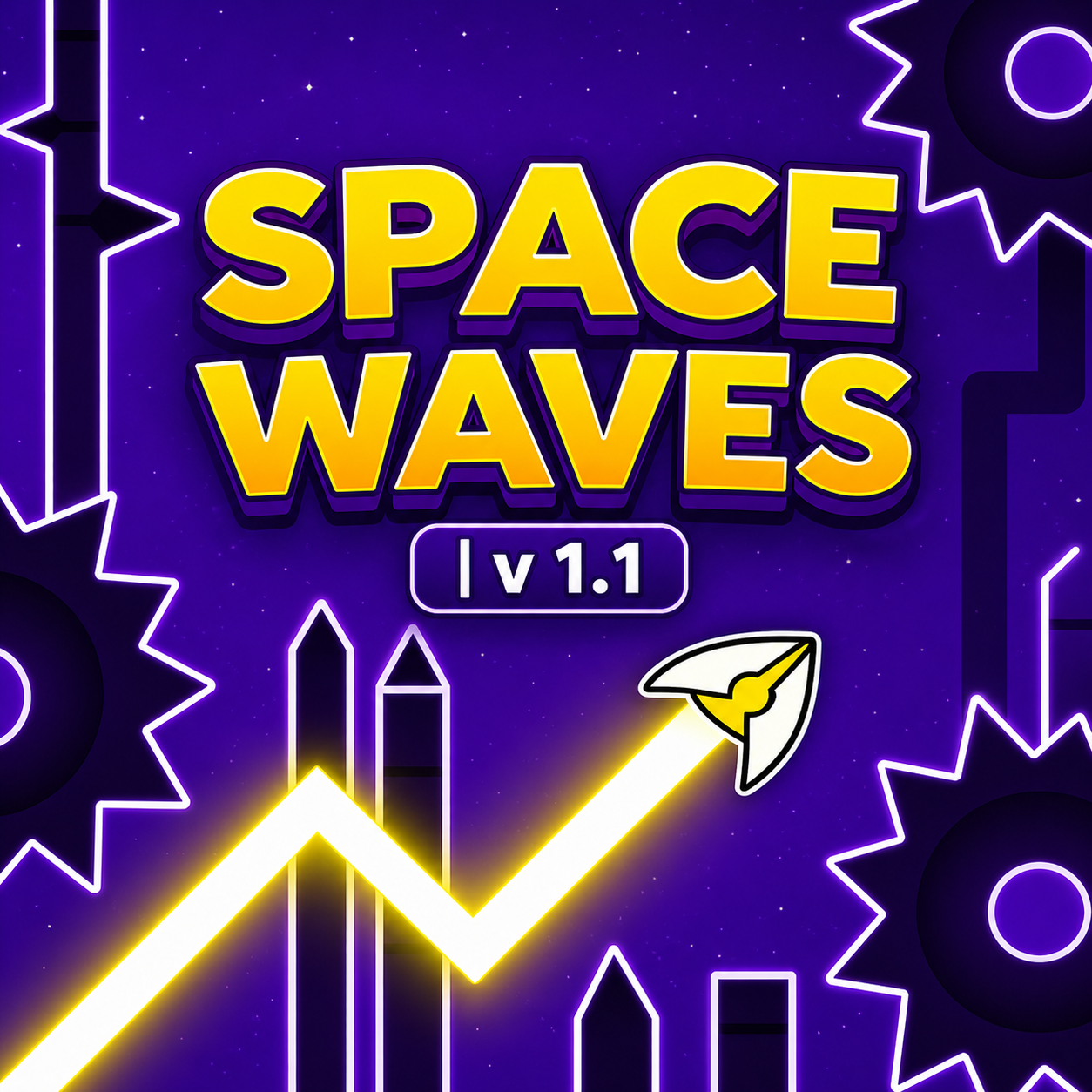
Space Waves | v 1.1 slides across the screen like a broken, oscillating corridor. To change course, each click is more than simply an action; it's a critical choice.
Orbital Flips In The Maze Of Spikes
The rhythm of movement allows no hesitation, forcing players to react immediately upon the signal. The game doesn't use static levels but creates the feeling that the entire space is in motion. Seemingly simple paths quickly transform into a dense series of geometric traps. Obstacles are arranged in familiar patterns but constantly change in distance and appearance. Each section is like a unique musical rhythm, requiring a different approach. Some sections require rapid, continuous clicking, while others demand a slow and precise rhythm. There are no random elements that obscure a player's abilities; success comes from understanding and mastering the mechanics.
One Click - Two Paths To Survival
With just one click, the game has built a deep and addictive challenge system. The simplicity of the operation opens up considerable difficulty, as every situation requires precise timing. There are no unnecessary actions, no auxiliary buttons; everything revolves around reflexes. Players will gradually realize that controlling the rhythm is more important than speed.
- Maintain a steady clicking rhythm instead of spamming continuously
- Observe at least 1–2 obstacles beforehand
- Don't play when distracted or tired
- Focus on improving each small section
- Take short breaks after consecutive failures
Player Psychology Is Under Pressure
Space Waves | v 1.1 always knows how to create psychological pressure through consecutive failures. Each collision with sharp spikes happens rapidly, making players want to play again immediately. This creates a continuous loop of trial-error-retry, easily drawing you in without realizing how much time is passing. However, the greatest pressure doesn't come from the difficulty but from knowing you could do better. When you're just a short distance away from passing, the feeling of regret will motivate you to continue. This is a very common psychological design in modern arcade games. It maintains a balanced level of tension without overwhelming the player.
New Lands That Are Brief But Hard To Tear Yourself Away From