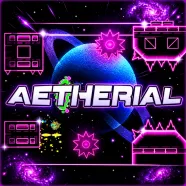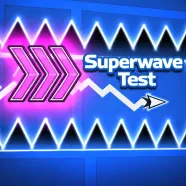
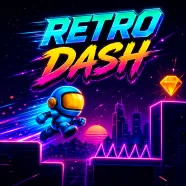

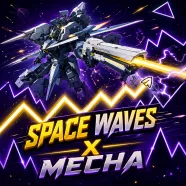




This trend started a long time ago, and Endless Dash is only carrying it on. In your hands is more than a simple cube; it's a consciousness-pulling point in a realm that is always evolving.
Feel The Voids In The Design
Playing the game makes you feel that the difficulty is traveling through you rather than on you. As the speed increases, you can no longer distinguish between reflexes and habits formed under pressure. More and more, the game becomes a test of your capacity to maintain stability in an unstable environment. There's no clear end point, only how much you remain alert enough to continue understanding what's happening. The gap between platforms isn't simply a test of skill. Players need to abandon the habit of looking and switch to feeling. The paths don't appear as a fixed map but as a series of intermittent hints. Sometimes, what you see is wrong compared to the outcome. Endless Dash makes trusting your eyes a risk, while trusting the rhythm becomes a survival skill. Later on, the spatial structure becomes less linearly logical, instead focusing on the deliberate repetition of patterns that deceive the reflexes. Players don't learn how to overcome obstacles but how not to be led astray by them.
Speed is A Crucial State
Endless Dash doesn't simply increase speed progressively but entirely changes how you process information in real time. Initially, you have time to analyze, but the further you go, the more analysis is replaced by almost unconscious reactions. The game isn't rushed, but it constantly narrows the gap between seeing and doing. The environment's limits on perception also affect speed, not just the character's movements. Situations that could once be handled logically gradually become instinctive reflexes. The gameplay creates a kind of soft pressure, not shocking but constantly eroding hesitation. When you reach a high point, you no longer feel like you're playing but rather maintaining a fragile balance.
Other Versions With The Same Theme